Generative AI Training in Hyderabad
Overview
Generative AI Training in Hyderabad has emerged as a growing hub for advanced artificial intelligence education, with a mix of university programs, corporate training collaborations, and online offerings tailored to generative AI technologies. Prospective learners can pursue foundational to specialized content covering large language models, diffusion models, prompt engineering, model fine-tuning, ethics, and deployment considerations for real-world applications.
Institutions and Providers
- University programs in AI and computer science from top engineering institutes located in Hyderabad, featuring courses that integrate generative AI topics into broader AI curricula.
- Premier research institutions and labs that offer short-term workshops, summer schools, and certificate programs focused on generative methodologies.
- Private training providers delivering instructor-led courses, bootcamps, and deep-dive tracks on generative AI, large language models, and related tooling.
- Online platforms with regional access enabling learners to combine local schedules with globally designed curricula.
Programs and Formats
- Short-term certificates (4–12 weeks) emphasizing practical skills such as building, fine-tuning, and evaluating generative models.
- Professional diploma programs spanning several months, integrating project work with industry-relevant case studies.
- University-credit courses that align with degree pathways, offering a mix of lectures, hands-on labs, and capstone projects.
- Blended formats combining in-person sessions in Hyderabad with remote coursework to accommodate working professionals.
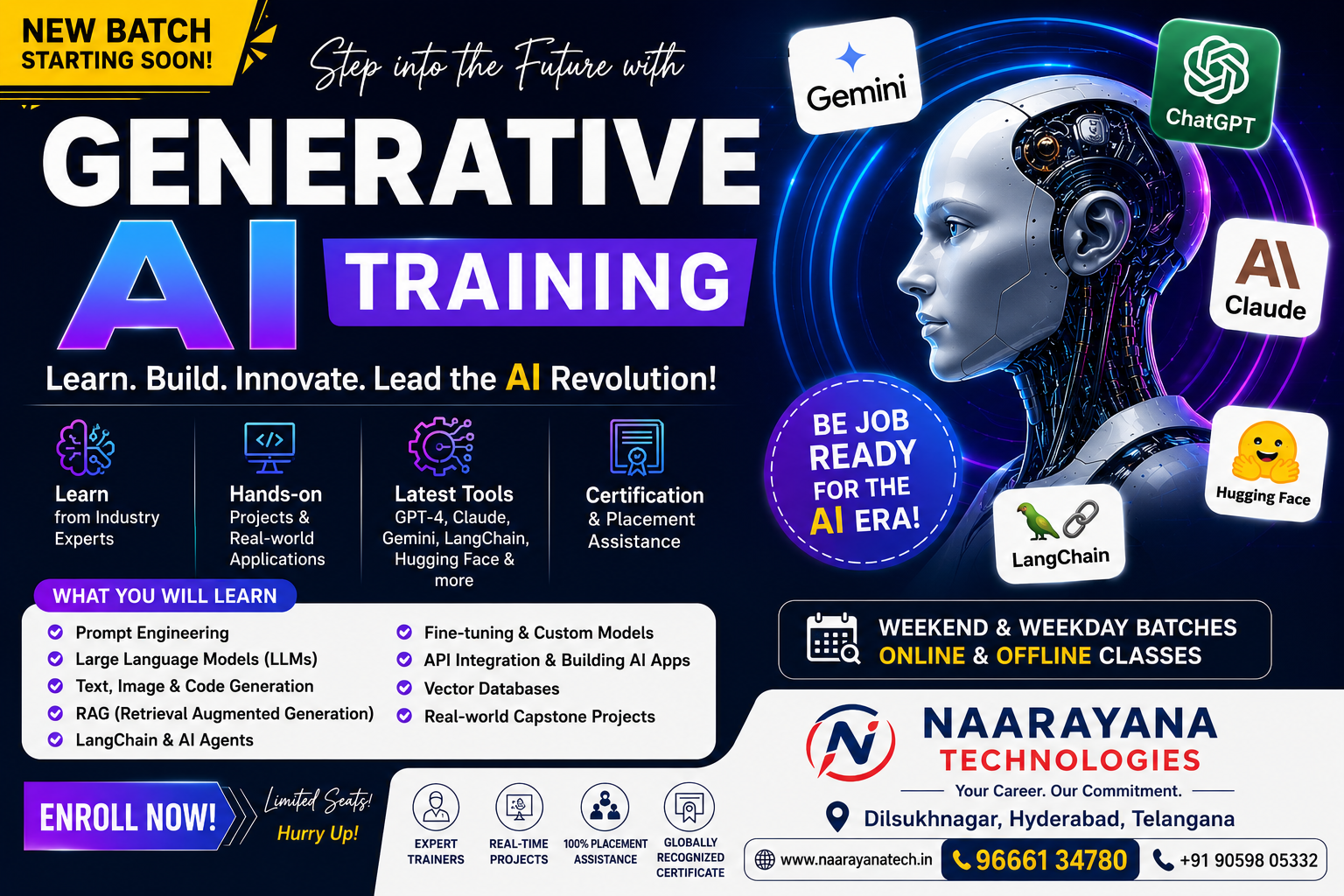
- Hands-on labs focusing on popular toolchains, including model fine-tuning, prompt engineering, data preparation, and deployment pipelines.
Curriculum Highlights
- Fundamentals of generative AI: architectures, training objectives, and evaluation metrics.
- Large language models: tokenization, instruction tuning, safety, and alignment.
- Diffusion and multimodal models: concepts, training considerations, and practical applications.
- Prompt engineering: techniques for effective interaction, instruction-following behavior, and bias mitigation.
- Data strategy: dataset curation, annotation standards, and governance for generative applications.
- Deployment: serving models in production, latency optimization, monitoring, and rollback plans.
- Ethics, safety, and compliance: privacy, copyright, and accountability in generative systems.
- Project work: end-to-end development cycles from problem framing to demonstration of a working prototype.
Prerequisites and Audience
- Foundational knowledge in programming (Python preferred), basic machine learning concepts, and a willingness to engage with modern AI tooling.
- Programs often target software engineers, data scientists, product managers, and technical professionals seeking to upskill for generative AI roles.
- Some advanced tracks require familiarity with neural networks, probability, and data handling fundamentals.
Admissions and Evaluation
- Applications typically require a resume, statement of purpose, and a brief portfolio or project summary demonstrating programming or AI exposure.
- Admissions may include short online assessments or interviews to gauge readiness for the coursework.
- Evaluation occurs through a combination of assignments, projects, quizzes, and capstone demonstrations.
Fees and Scholarships
- Tuition varies by program length, format, and institution, with options ranging from moderate to premium price points.
- EMI options are commonly offered to assist eligible learners.
- Some programs provide access to alumni networks and ongoing mentorship as part of the package.
Industry Partnerships and Outcomes
- Collaborations with local tech firms, startups, and multinational companies to provide hands-on projects and potential internship opportunities.
- Career support services including resume reviews, interview preparation, and portfolio development.
- Learners can pursue roles such as AI/ML Engineer, Generative AI Specialist, Prompt Engineer, Applied Scientist, or Product/Technical Lead focused on AI-enabled solutions.
How to Choose a Program
- Identify your goals: foundational knowledge, practical skills, or certification for career advancement.
- Compare curriculum depth, project emphasis, and the balance between theory and practice.
- Review faculty profiles, industry connections, and the availability of real-world datasets for capstone work.
- Consider delivery format, schedule flexibility, and location accessibility within Hyderabad.
- Check accreditation, certification recognition, and post-course support.
Getting Started
- Gather prerequisite materials and confirm readiness for the chosen track.
- Review application timelines, admission requirements, and any prerequisite assessments.
- Prepare a concise portfolio or project summary to illustrate relevant experience and interests.
- Plan for a smooth transition into the program by aligning work commitments with study schedules.
Outcomes and Next Steps
- Upon program completion, participants should be capable of contributing to generative AI projects, implementing best practices, and collaborating with cross-functional teams.
- Graduates may pursue advanced studies, industry certifications, or roles focused on model development, deployment, and ethical governance.
If you would like, I can tailor this content to emphasize specific local institutions, a particular program duration, or a desired audience profile (students, professionals, or executives).